Michigan Psychologist License Requirements
To become a licensed psychologist in Michigan, you need a doctoral degree in psychology, 2,000 hours of postdoctoral supervised experience, and a passing score on the Examination for Professional Practice in Psychology (EPPP). Michigan also offers a Limited Licensed Psychologist (LLP) credential for those with a master’s degree who want to practice under supervision.
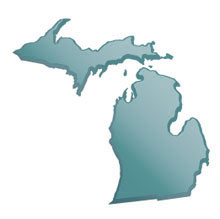
Michigan’s psychology board issues more than one type of license, and the path you take depends on your degree level. Full licensure as a Licensed Psychologist (LP) requires a doctorate. But if you’ve earned a master’s degree and want to enter the field sooner, the Limited Licensed Psychologist credential gives you a way in, working under the supervision of a fully licensed psychologist while you build your career.
This guide covers both pathways: what each requires, how the EPPP works in Michigan, and what renewal looks like once you’re licensed. If you’re also weighing related options, see our guide to Michigan LPC counseling licensure requirements.


Michigan Psychology License Types
The Michigan Board of Psychology, overseen by the Bureau of Professional Licensing (LARA), issues several license types. The two most relevant for career-track psychologists are the Limited Licensed Psychologist and the full Licensed Psychologist.
| License Type | Degree Required | Supervised Hours | EPPP Score | Practice Scope |
|---|---|---|---|---|
| Limited Licensed Psychologist (LLP) | Master’s in psychology | 2,000 post-master’s supervised hours | 350 minimum | Supervised practice only |
| Licensed Psychologist (LP) | Doctoral degree (PhD, PsyD, or EdD) | 2,000 postdoctoral hours | 500 minimum | Independent practice |
The doctoral educational limited license (DELL) is an intermediate credential that allows doctoral students to accumulate predoctoral internship hours while still in their program. It’s a required step toward full licensure, not a standalone career license. Hours accrued under the DELL typically apply only to predoctoral requirements.
Requirements for Full Licensure as a Licensed Psychologist (LP)
Doctoral Education
Michigan requires a doctoral degree in psychology (PhD, PsyD, or EdD) from a regionally accredited institution. The program must be board-approved and include a supervised internship. Most applicants complete APA-accredited programs, which simplifies the approval process.
Supervised Experience
Michigan requires approximately 4,000 total hours of supervised experience, split between predoctoral internship hours completed as part of your doctoral program and postdoctoral hours accumulated after graduation under a fully licensed psychologist. The Michigan Board of Psychology governs the specific distribution and eligibility of those hours and must meet detailed criteria set by the Board. Call LARA directly to confirm how your hours will be counted.
EPPP and Jurisprudence Exam
Full licensure requires passing two exams. The Examination for Professional Practice in Psychology (EPPP), developed by the Association of State and Provincial Psychology Boards (ASPPB), tests knowledge across eight core domains. Michigan generally requires a score of at least 500 out of 800 on Part 1 of the EPPP, as defined by the Board. You also passed the Michigan Jurisprudence Examination, which covers state-specific laws and ethics for the practice of psychology, as required by the Board.
To board the EPPP, you must hold either a master’s limited license or a doctoral educational limited license, or have met all other requirements for full licensure. When you’re ready, email the Michigan Board at [email protected] with your name, phone number, license number, and email. You’ll receive registration materials within a few weeks, along with a 60-day testing window, once your Authorization to Test is issued.
Requirements for the Limited Licensed Psychologist (LLP)
The LLP credential is designed for master’s-level psychologists who want to practice in the field while under the oversight of a fully licensed psychologist. It’s a legitimate career path, not just a stepping stone, though it does restrict independent practice. Those drawn to macro-level or clinical case management work may also want to review the Michigan social work license requirements, which offer a parallel master’s-level entry point.
To qualify, your master’s degree in psychology must be from a regionally accredited school and include at least one course each in assessment and treatment, one course in scientific and professional ethics, and a supervised practicum (typically 500 or more hours, or as required by the Board). To earn your degree, you’ll need 2,000 additional hours of supervised postgraduate experience.
The EPPP is required at the master’s level as well, with Michigan generally requiring a passing score of 350 (vs. 500 for full licensure), as defined by the Board. For a master’s-level candidate, an IBoard score of 500 or higher may satisfy the examination requirement for both license levels, subject to Board approval.
LLPs must practice under supervision unless they are working for a governmental agency or a qualifying nonprofit organization. The license renews every two years.
Out-of-State Psychologists: Licensure by Endorsement
If you’re already licensed as a psychologist in another state or Canadian province, Michigan offers a licensure-by-endorsement pathway. You’ll need to submit verification of your current license, sent directly from the issuing Board, official transcripts, and your EPPP scores. Candidates with ten or more years of licensure in another jurisdiction may also qualify through the Certificate of Professional Qualification in Psychology (CPQ) route.
Anyone with an active disciplinary sanction on their current license is not eligible. Resolved sanctions are reviewed on a case-by-case basis.
License Renewal and Continuing Education
Michigan psychology licenses must be renewed every two years through the Michigan Board of Psychology (LARA). At renewal, you’re required to complete 30 hours of approved continuing education, including three hours in ethics, two hours in pain and/or symptom management, and implicit bias training (per Michigan LARA requirements). You’ll also respond to good moral character and disciplinary questions as part of the renewal application.
Licenses that lapse can be reinstated within three years with proof of 30 CE hours. After three years, you may need to retake the EPPP.
Psychologist Salaries in Michigan
According to the Bureau of Labor Statistics, clinical and counseling psychologists in Michigan earn an average annual salary of $88,810. Salaries vary by setting: private practice, hospital systems, school districts, and state agencies all hire psychologists at different pay scales. Metropolitan areas like Detroit and Grand Rapids typically offer higher compensation than rural settings.
Frequently Asked Questions
Can I practice psychology in Michigan with just a master’s degree?
Yes, but with restrictions. The Limited Licensed Psychologist (LLP) credential allows master’s-level psychologists to practice in Michigan under the supervision of a fully licensed psychologist. LLPs working for governmental agencies or qualifying nonprofits may have more flexibility. Independent unsupervised practice requires full doctoral-level licensure.
What is the passing score for the EPPP in Michigan?
Michigan requires a score of at least 500 out of 800 on Part 1 of the EPPP for full (doctoral) licensure. For the Limited Licensed Psychologist credential, the passing score is 350. If a master’s-level candidate scores 500 or higher, that score satisfies the examination requirement for both license levels.
How long does it take to become a licensed psychologist in Michigan?
Most people complete the process in 8 to 12 years. A bachelor’s degree takes four years, a doctoral program typically runs five to seven years (including the required internship), and you’ll need one additional year of postdoctoral supervision after graduation before applying for full licensure.
Does Michigan participate in PSYPACT for telehealth?
Yes. Michigan participates in the Psychology Interjurisdictional Compact (PSYPACT), which allows fully licensed psychologists to provide telehealth services across state lines without obtaining individual licenses in each state. PSYPACT participation is available only to fully licensed psychologists (LPs). Limited Licensed Psychologists (LLP) are not eligible.
How do I renew my Michigan psychology license?
Michigan psychology licenses must be renewed every two years through the LARA online portal at michigan.gov/miplus. Renewal requires 30 hours of approved continuing education, including specific hours in ethics, pain/symptom management, and implicit bias training. You’ll also need to answer questions about good moral character and discipline.
Key Takeaways
- Two license types: Michigan offers the Limited Licensed Psychologist (LLP) for master’s-level practitioners and the Licensed Psychologist (LP) for those with a doctorate. Each has different education, experience, and EPPP score requirements.
- Doctoral licensure requires 4,000 total hours: 2,000 during your internship and 2,000 more in postdoctoral supervised practice after you graduate.
- Two exams are required: the EPPP (scored 500 minimum for LP, 350 for LLP) and the Michigan Jurisprudence Examination covering state-specific law and ethics.
- Licenses renew every two years, with 30 hours of continuing education required, including mandatory components in ethics, pain management, and implicit bias training per LARA requirements.
- Michigan is a PSYPACT member: fully licensed psychologists can provide telehealth services across participating states without additional licensure.
Ready to explore your options? Use our state-by-state guides to compare psychology degree programs and understand licensing requirements in Michigan and beyond.
2024 US Bureau of Labor Statistics salary and employment figures for Social Workers, Social and Human Services Assistants, Social and Community Service Managers, and Substance Abuse, Behavioral Disorder, and Mental Health Counselors, reflect state and national data, not school-specific information. Conditions in your area may vary. Data accessed April 2026.